
Social Licence and the Future of Horse Sport
How public perception is changing - and what equestrians can do next
For many of us, horses are not a hobby. They are a way of life.
They shape our routines, our relationships, our sense of meaning. They give us partnership, purpose, and connection. For some, they offer sport and ambition. For others, healing, community, and quiet joy.
But alongside that love, a difficult conversation is growing louder:
Will society continue to accept the use of horses in sport - as it is practiced today?
This question sits at the heart of what is increasingly being called equestrianism’s social licence to operate.
And whether we like the phrase or not, the issue it describes is very real.
Social licence is not a threat meant to scare riders - it is an invitation to reflect on what our sport asks of horses, and what society is willing to accept.
What is a Social Licence?
Most industries are regulated through laws: clear rules about what is legal and permissible.
But there is another layer of permission that matters just as much.
A social licence to operate is the ongoing approval granted by the public - an unwritten understanding that an activity is ethically acceptable.
It isn’t fixed. It can be strengthened, questioned, or withdrawn entirely.
In equestrianism, this “licence” depends on something simple but profound:
Does society believe that horses are treated with respect, care, and fairness - and that their welfare comes first?
If the answer becomes uncertain, public trust begins to erode.
And history shows that once trust is lost, it is difficult to regain.
Why is This Conversation Growing Now?
In recent years, concern about horse sport has become more visible, more intense, and harder to ignore.
Protests at elite competitions, viral warm-up footage, and growing criticism of certain training methods have brought equestrianism under a microscope.
Even dedicated horse people are beginning to feel uncomfortable with:
-
The frequency of serious falls in some disciplines
-
The normalisation of force or excessive equipment
-
The public image of top-level sport
-
The sense that horses are sometimes being asked to participate through pressure rather than partnership
And crucially, this scrutiny is no longer limited to insiders.
Modern technology has changed everything.
Almost everyone now carries a phone capable of recording high-quality video. Social media allows “backstage” moments - good or bad - to spread instantly.
Horse sport is no longer something that happens quietly within its own bubble.
It is happening in full view.
Is the Threat to Horse Sport Real?
Yes - and the evidence is sobering.
A YouGov survey commissioned by World Horse Welfare found that:
-
40% of the UK public would only support the use of horses in sport if welfare improves
-
20% do not support it at all
Perhaps most strikingly, the views of people who regularly interact with horses were not dramatically different from the general public.
This suggests that the issue is not simply “outsiders misunderstanding horses.”
It is something deeper:
a genuine ethical shift in what society considers acceptable animal use.
How Social Licence is Lost
Social licence rarely disappears overnight.
It erodes through a pattern:
-
Harmful practices becoming normalised
-
Welfare concerns dismissed rather than addressed
-
Governing bodies appearing slow to act
-
The public witnessing moments that feel uncomfortable or cruel
While many horses are cared for exceptionally well, it only takes a small number of visible incidents to shape perception.
Examples in recent years - including abuse cases, controversial training practices, and welfare scandals - have raised serious questions about the culture of some areas of the sport.
Over time, repeated exposure to compromised welfare can cause a dangerous form of blindness within an industry:
What becomes familiar begins to feel normal - even when it should not.
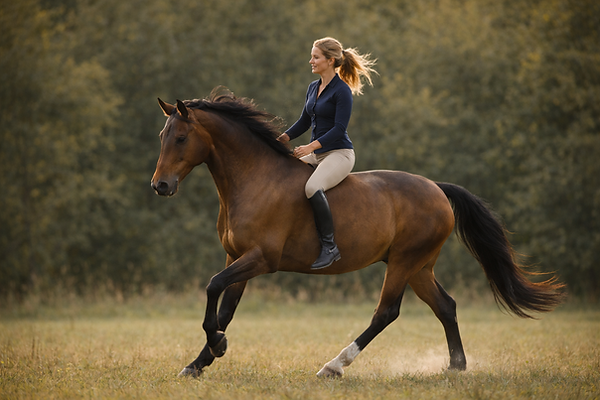
When Rules and Headlines Undermine Confidence
Social licence is not only shaped by the worst abuses.
It is also shaped by the signals an industry sends - through its rules, its enforcement, and the moments that reach the public eye.
For example, in November 2025, the Fédération Équestre Internationale (FEI) approved a controversial change to the “blood rule” in showjumping. The automatic elimination for visible blood caused by tack, equipment, or the rider was removed.
From January 1, 2026, the system shifts from instant disqualification to recorded warnings, allowing greater veterinary discretion in deciding whether a horse may continue.
To many within the sport, this may feel like nuance - an attempt to allow fair judgement in complex situations.
But to the wider public, it risks reading very differently:
a softening of welfare standards at the exact moment society is asking for stronger protection, not less.
These moments matter, because social licence depends not only on what we do, but on what people believe we are willing to tolerate.

The Fragility of Trust in the Modern Era
Another uncomfortable reality is that horse sport is increasingly shaped by visibility.
In the age of social media, trust can fracture overnight - not only because of systemic issues, but because of individual moments that become symbolic.
Even figures held up as ambassadors of excellence and ethical riding can become part of welfare controversy, with footage circulating widely and painfully.
When this happens, the impact goes far beyond one person.
It reinforces the public fear that behind the polished surface of elite sport, there may be practices that do not align with modern expectations of animal welfare.
For equestrianism, these moments are not just scandals.
They are warning lights:
social licence is fragile, and public confidence is easily lost.
Could Equestrianism Face the Same Fate as Other Animal Industries?
It is worth paying attention to the wider pattern.
Activities once considered socially acceptable have become widely condemned, even without immediate legal change:
-
Wild animals in circuses
-
Orcas in captivity
-
Certain forms of hunting
-
Dog fighting
-
Greyhound racing in many parts of the world
In many cases, the law followed public sentiment - not the other way around.
Equestrian sport is not immune to this.
The question is not whether horses will always remain part of human life.
The question is whether competitive and recreational riding will continue to be viewed as ethically legitimate in the decades ahead.
So What Can We Do?
The most important thing to say is this:
Social licence is not protected through defensiveness.
Research shows that communication strategies which dismiss public concern, or attempt to “educate people into agreement,” often backfire.
Trust is built through shared values:
-
Transparency
-
Accountability
-
Willingness to improve
-
Visible commitment to horse welfare
The future of horse sport depends on the industry’s ability to respond with humility and courage.
Reward What We Want to See More Of
Right now, some of the strongest opportunities for protecting social licence come from celebrating the riding that already aligns with modern ethics: softness, partnership, calm communication.
Recent examples suggest the public responds powerfully to this.
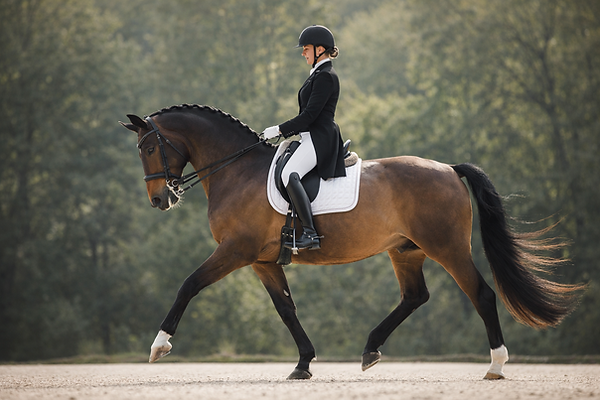
At the Amsterdam World Cup, British rider Becky Moody received an award for harmony between horse and rider - voted for by the public. While her competition placing reflected the judges’ scoring system, the public recognition highlighted something else entirely:
People are watching for relationship, not just results.
That matters.
Because social licence is not maintained by technical excellence alone. It is maintained by what society believes the sport values.
If harmony, willingness, and welfare become more visible - and more rewarded - the industry moves toward the future people want to support.
It also raises an important question:
Should our judging priorities evolve to reflect not only performance, but partnership?
The Role of Governing Bodies
Rules and welfare initiatives have improved in many disciplines:
-
tighter regulations around abusive riding
-
increased focus on equipment fit and noseband tightness
-
better retirement and rehoming pathways
-
safety innovations such as frangible cross-country fences
-
clearer sanctions for blood, excessive force, or illegal methods
But rules alone are not enough.
They must be enforced - consistently and bravely - and supported culturally, not just written down.
Officials, stewards, and judges need real empowerment to act.
And riders need to feel that welfare is not a threat to success, but the foundation of it.
The Role of Everyday Horse People
Social licence is not shaped only at the Olympics.
It is shaped in every yard, every warm-up ring, every social media post, every decision we make when no one is watching.
Each of us plays a part.
Protecting the future of horse-human partnership means asking:
-
Are we listening to the horse in front of us?
-
Are we open to change, even when tradition is comfortable?
-
Are we willing to speak up when something isn’t right?
-
Are we prioritising wellbeing over appearance, performance, or pressure?
Horse sport will not be protected by pretending there is no problem.
It will be protected by becoming the kind of industry that deserves trust.
A Future Worth Fighting For
At its best, equestrianism is extraordinary.
It is partnership across species. It is care, communication, skill, patience, and devotion.
It offers disabled riders freedom. It gives young people confidence. It provides horses with purpose, enrichment, and excellent lives.
But the future depends on one central truth:
We will only keep our social licence if we put the horse - mentally and physically - at the centre of everything.
What looks like good welfare today may not be enough tomorrow.
The standards are rising.
The public is watching.
And the horse deserves our very best.
Final Reflection
The question is not whether horse sport is perfect.
It never has been.
The question is whether we are willing to evolve - proactively, ethically, and together - to protect a future where horses are not used, but partnered.
Because ultimately, people don’t care how much we know…
until they know how much we care.
“…we must never forget, every time we sit on a horse, what an extraordinary privilege it is: to be able to unite one’s body with that of another sentient being, one that is stronger, faster and more agile by far than we are, and uncommonly forgiving.”
- William Steinkraus, Olympic Equestrian
Let’s Work Together
Get in touch so we can start working together.


